Metabariatrics · Mumbai & Navi Mumbai
Understanding Obesity
Health risks, BMI classification, and treatment options. We're here to help in Mumbai & Navi Mumbai.
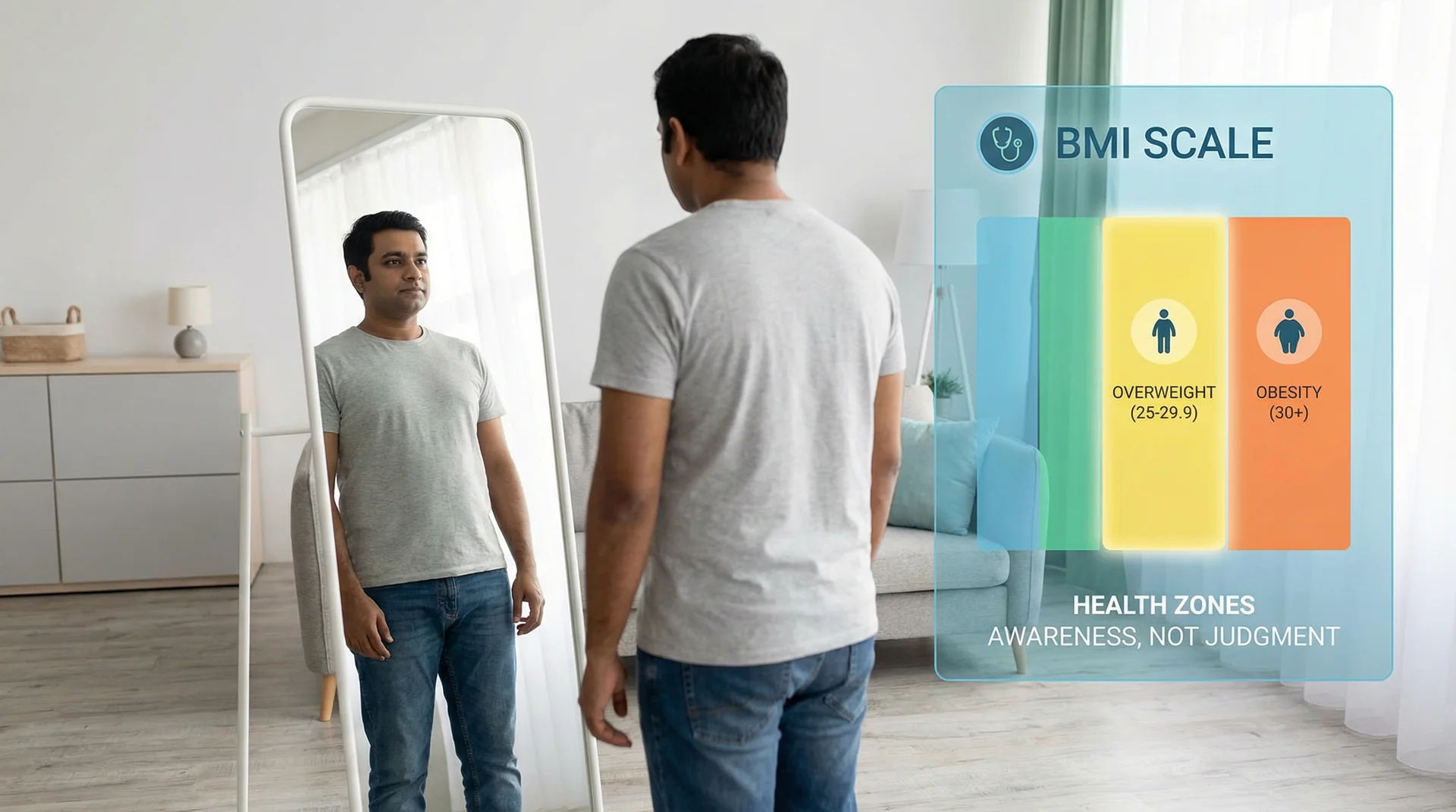
What is Obesity?
The World Health Organization defines overweight and obesity as a chronic complex disease caused by abnormal or excessive fat accumulation that is a risk to health. It is in most cases a multifactorial disease due to environmental factors, psycho-social factors, and genetic causes. A body mass index (BMI) over 25 is considered overweight while BMI over 27.5 kg/m² is defined as obese.


What are the health risks of obesity?
Numerous diseases are associated with obesity (including but not limited to):
- Adult Type 2 diabetes
- Ischemic heart disease
- Hypertension
- Obstructive sleep apnoea (persistent snoring)
- Osteoarthritis (chronic knee pain)
- Non-alcoholic steatohepatitis (NASH), NAFLD
- GERD (heart burns, acidity)
- Dyslipidaemia
- Social embarrassment, Depression
- Infertility, Polycystic Ovarian Disease
- Stress incontinence, Lower limb venous stasis
- Intertrigo, Lymphedema
- Cancers
What are the causes of obesity?
Calorie accumulation is converted and stored as fat. If one burns the calories consumed regularly, weight stays constant. Excess calories over time lead to significant weight gain. Lifestyle plays a major role: similar dietary habits and sedentary routines (e.g. "we work a lot – exhaust not exercise"), and the abundance of high-calorie, cheap ready-to-eat food are significant factors. Severe obesity: causes of morbid obesity are multiple and complex; research indicates underlying genetic causes, and many people try their best to lose weight but are unable to do so.

How to know if one is obese?
Obesity can be quantified by BMI, body fat %, waist circumference, and waist-hip ratio. BMI is the most commonly used measure (formula: Weight in kg / Height in m²), though it does not account for activity levels, body fat mass, or body composition.
Classification of obesity
| BMI (Global) | Classification | BMI (Asians) |
|---|---|---|
| 25 – 29.9 | Overweight | 23 – 24.9 |
| 30 – 39.9 | Obese | 25 – 32.4 |
| > 40 | Morbid obesity | > 37.5 |
| > 35 – 39.9 + Co-morbidities | Morbid obesity | 32.5 – 37.4 + Co-morbidities |
Waist circumference (WHO upper limits)
Global: Males 102 cm/40 in, Females 88 cm/35 in. Asians: Males 90 cm/35.5 in, Females 80 cm/31.5 in.
Body fat percentage (American Journal of Clinical Nutrition)
Men 20–39: 8–19%; 40–59: 11–21%; 60–79: 13–24%. Women 20–39: 21–32%; 40–59: 23–33%; 60–79: 24–35%.
How successful is diet and exercise long term?
Diet and exercise can produce 5–10% weight loss for a few months, but many people regain weight (yo-yo effect). Obesity is a chronic, multifactorial problem; reduced calorie intake can lower BMR and lead to plateau. For many with severe obesity, bariatric surgery offers a more effective long-term option.
BMI calculator
Check your BMI instantly and understand what it may mean for your health.
A specialist consultation can help you plan long-term treatment options.
Healthy weight range for your height: 53.5 - 72.0 kg
BMI is a screening tool and not a diagnosis. Please consult your doctor for complete assessment.
Take the First Step
Your transformation starts with one conversation.
Over 2,000 successful procedures and 15 years of expertise. Book a confidential consultation with Dr. Sharad Sharma. No commitment, no pressure.
2,000+
Successful Procedures
15+
Years of Expertise
IFSO
International Member